Kinetics / Robotics / Autonomous systems

Physical machines.
Intelligent autonomy.

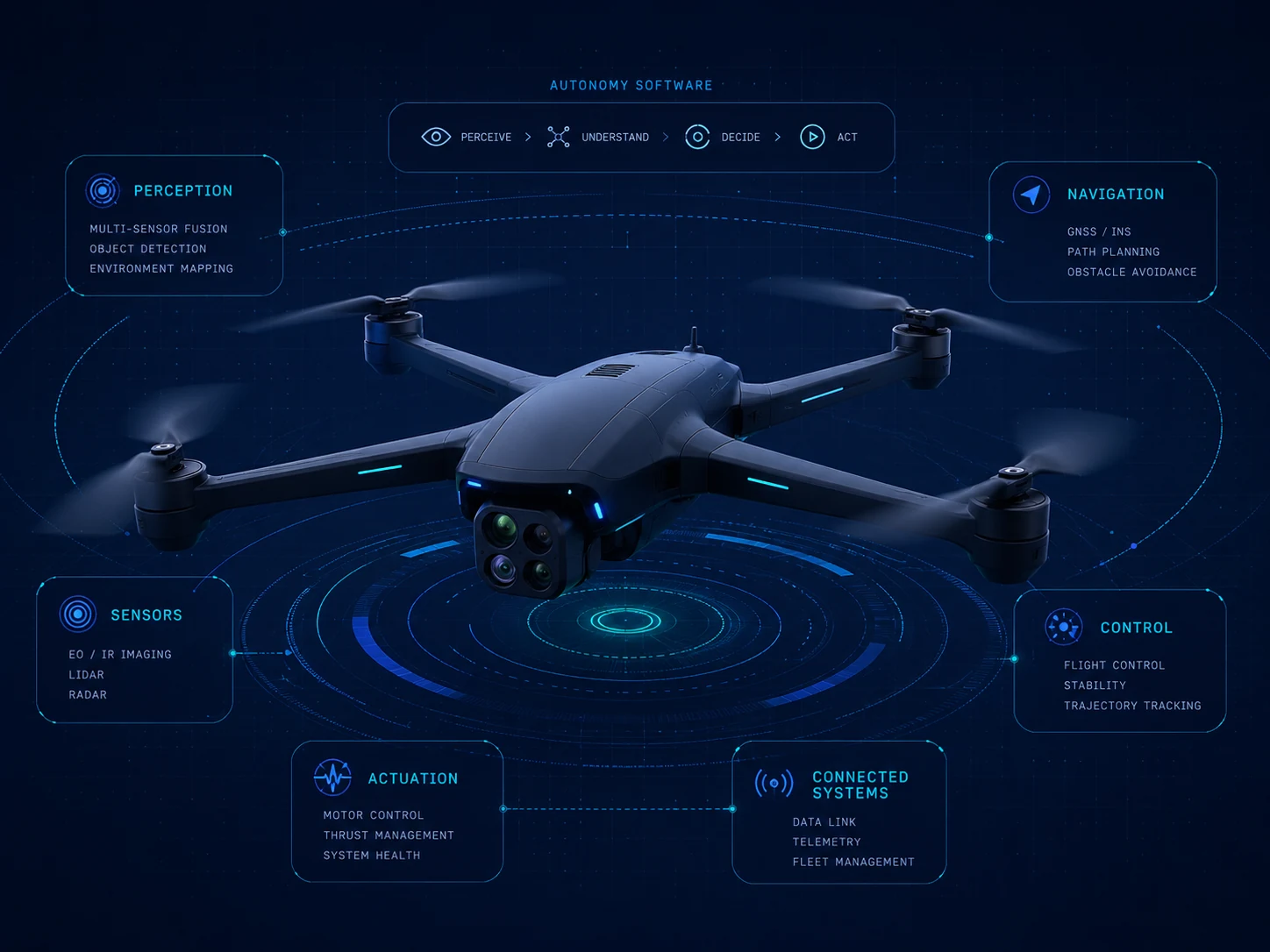
SKI develops both sides of advanced robotics: the physical platform that senses and acts, and the software stack that interprets, decides, coordinates and automates the mission.

Conceptual autonomous robotics interface showing perception, navigation, sensing, control, actuation and connected systems around an aerial platformROBOTICS / AUTONOMY SYSTEM

01 / TWO CAPABILITIES, ONE SYSTEM

Hardware and software,
engineered side by side.

SKI does not stop at dashboards or bare mechanical prototypes. We connect the machine, embedded electronics and intelligent automation into one operating architecture.

PHYSICALPLATFORM ENGINEERING

Build the machine that can sense, move and carry out work.

Mechanical architecture, propulsion, sensing, electronics and actuation are designed around the mission—not added as disconnected components.

  • Airframe and structural architecture
  • Propulsion, power and thermal layout
  • Sensor placement and field-of-view design
  • Payload, servo and release mechanisms
  • Embedded electronics and communication buses
  • Prototype fabrication and physical validation
Inspect physical capability ↗
INTELLIGENCEAUTONOMY & AUTOMATION

Give the machine perception, decisions and controlled behaviour.

Software connects sensor data to mission logic, safe commands, operator visibility and repeatable autonomous workflows.

  • Computer vision and environmental perception
  • Sensor fusion and state estimation
  • Autonomous navigation and mission state machines
  • Telemetry, command and operator interfaces
  • Reliability analytics, logs and recovery logic
  • SITL, Gazebo, HIL and staged automation testing
Inspect software capability ↗

SHARED INTEGRATION LAYER
MAVLink / ROS2 / Embedded I/OMission evidence and safety logicSimulation-to-hardware validation

02 / CAPABILITY CONSOLE

Select either side.
Inspect how it operates.

Move between physical-system engineering, autonomy software and the supporting command, reliability and validation layers.

SKI-KIN / PHYSICAL

CAPABILITY VIEW

PHYSICAL ROBOTIC PLATFORM

Engineer the structure, sensing and actuation around the mission.

Develop the physical architecture that carries power, compute, sensors and payloads while maintaining stability, access, thermal control and serviceability.

DESIGNStructure + mechanisms
INTEGRATEPower + sensors
VALIDATEPhysical behaviour
Platform architecturePropulsion & powerSensor integrationPayload actuation

03 / DEMONSTRABLE WORK

Capability backed by
clear maturity positioning.

Only work that can be shown credibly remains public. Broader autonomous-platform development stays internal until validated evidence is ready.

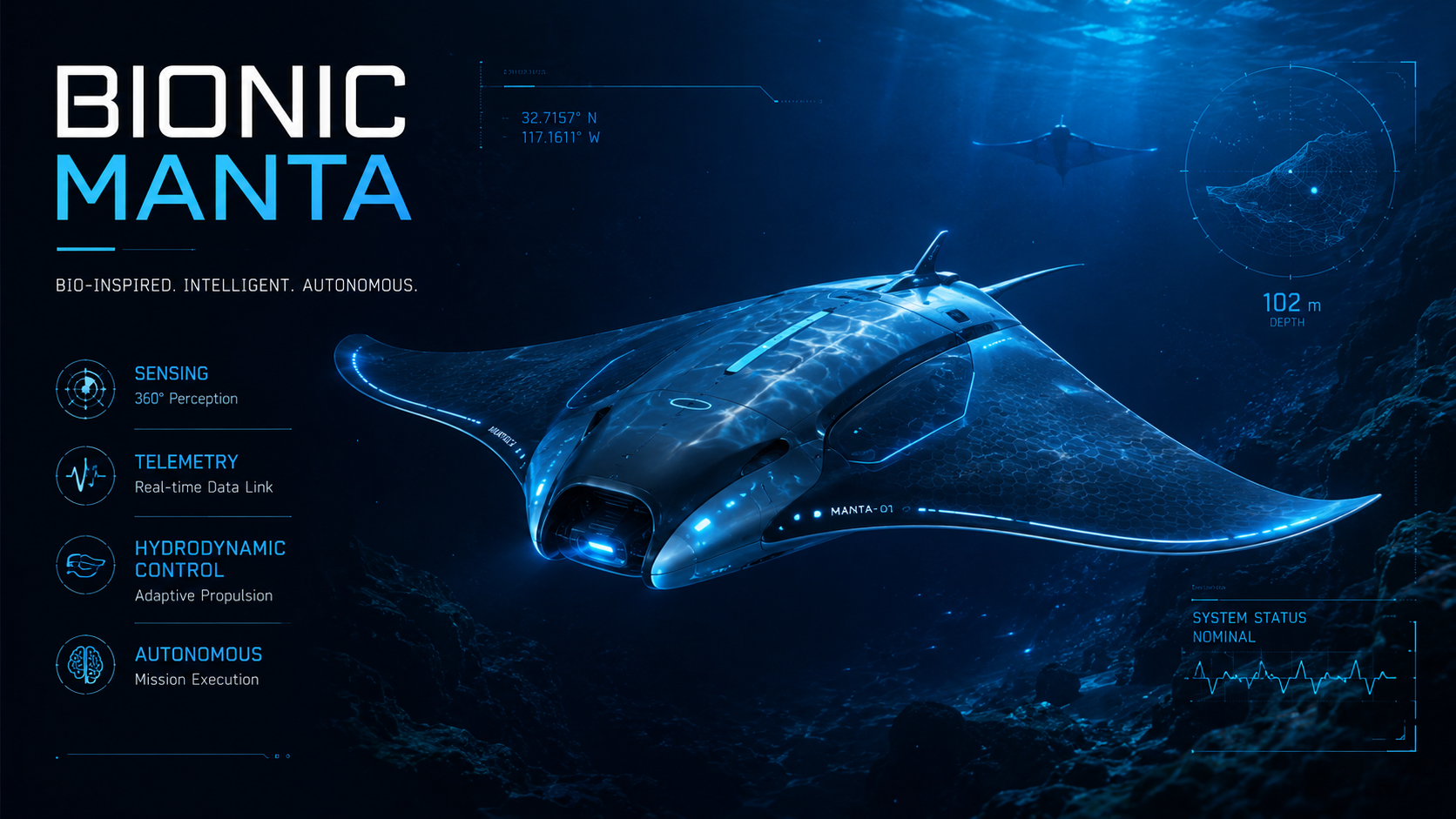
Bio-inspired underwater robotics concept visualBIO-INSPIRED ROBOTICS / CONCEPT

Bionic Manta

Underwater robotic filtration and monitoring architecture inspired by manta-ray locomotion and feeding mechanisms.

Open project ↗
EMBEDDED CONTROL / SYSTEM INTEGRATION

Machine intelligence layer

Flight controllers, companion computers, sensor buses, servo actuation, telemetry and staged hardware-in-the-loop validation.

Capability area
PORTFOLIO GOVERNANCE / PUBLIC EVIDENCE

Capability-first disclosure

SKI keeps higher-ambition robotics programmes internal until performance claims, validation logic and system evidence are strong enough for public release.

Operating principle

04 / WHAT SKI CAN BUILD

Complete physical and software robotics development.

  • UAV and mobile robotic platform architecture
  • Airframe, payload and actuation mechanisms
  • Onboard AI perception and sensor fusion
  • Flight-control, embedded and MAVLink integration
  • Autonomous navigation and mission state machines
  • Operator software, telemetry and reliability intelligence
  • Simulation, SITL, Gazebo and staged physical validation

05 / DELIVERY BOUNDARY

Capability is built at system level.

Our robotics work connects mechanical design, electronics, sensors, embedded control, autonomy software, operator tools and payload mechanisms. Each project is presented at its verified development stage, with performance and deployment claims kept traceable to evidence.

Discuss a robotics system